Date: January 1970
Location: Xinjiang
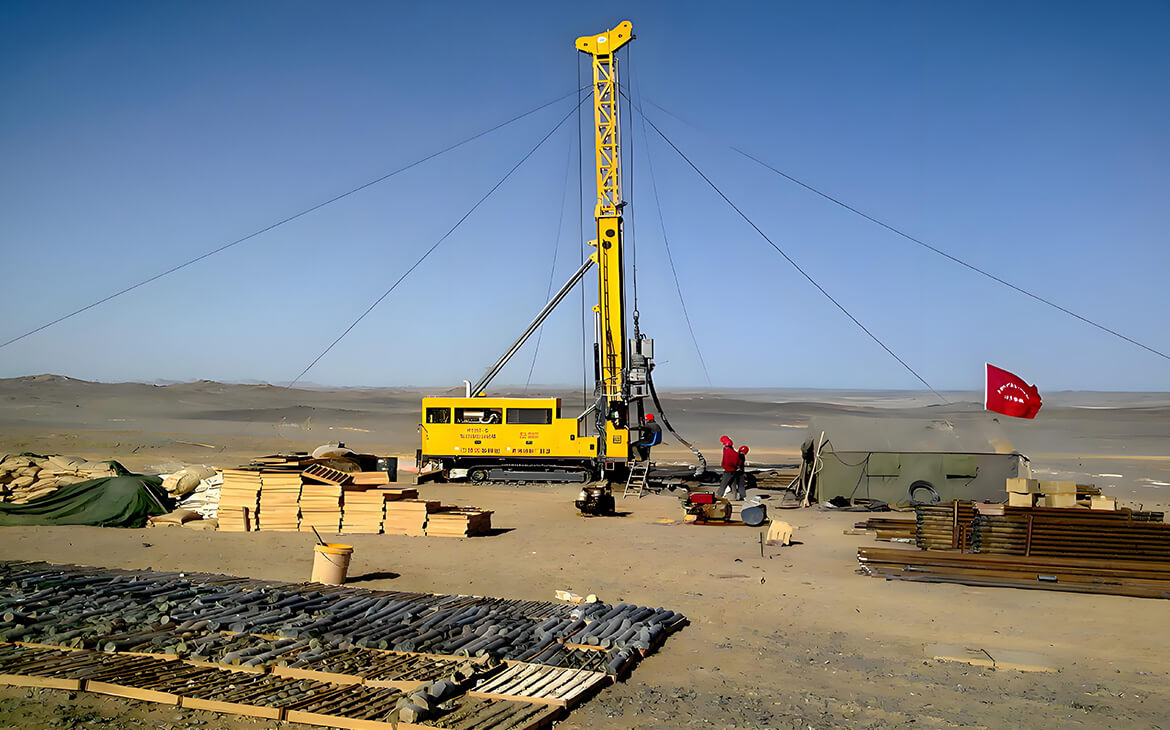
The Altai Mountains Geological Survey (2022–2025) is a large-scale government-led initiative aimed at identifying mineral deposits in the mountainous region of Xinjiang. Led by the China National Administration of Geology and Mineral Resources (CAGMR), the project focuses on gold, copper, rare earth elements, and coal exploration to support China’s strategic resource security.
1. Map mineral distribution using advanced geophysical and geochemical techniques.
2. Assess the economic viability of discovered reserves.
3. Promote sustainable mining practices to align with environmental regulations.
1. Remote Sensing & GIS Integration
• Satellite imagery and drone surveys identified potential mineralized zones with high-resolution data.
• GIS software analyzed geological structures to prioritize drilling targets.
2. Deep-Sea Drilling Technology
• For coalbed methane exploration in the Altai Basin, engineers deployed semi-submersible drilling rigs capable of operating in extreme altitudes (up to 4,000 meters above sea level).
3. AI-Driven Data Analysis
• Machine learning algorithms processed thousands of drill core samples to predict mineral concentrations and optimize exploration routes.
• Gold Deposits: High-grade gold veins discovered in the Karamay area, estimated to hold 50–80 tonnes of gold.
• Rare Earth Elements: Preliminary assays confirmed significant neodymium and dysprosium reserves in granite pegmatites.
• Coal Reserves: New coalfields identified near Urumqi, with estimated reserves of 2 billion tonnes of coking coal.
• Eco-Friendly Drilling: Waterless drilling techniques reduced water consumption by 70%, mitigating risks to local groundwater.
• Reclamation Plans: Post-exploration reclamation included soil stabilization and revegetation to restore ecosystems.
• Carbon Footprint Reduction: Solar-powered field camps minimized fossil fuel use during remote operations.
• Harsh Climate: Extreme cold (-40°C) and high-altitude conditions required specialized equipment and crew training.
Solution: Deployed modular, prefabricated shelters and imported Arctic-rated machinery.
• Geopolitical Risks: Cross-border mineral transport posed logistical hurdles.
Solution: Established partnerships with local logistics firms and secured government export permits.
Economic and Strategic Impact
• Job Creation: The project directly employed over 2,000 local workers and supported 10,000 jobs in related industries.
• Revenue Contribution: Expected to generate $5–8 billion in mineral exports over the next decade.
• Energy Security: Coal discoveries aim to reduce China’s reliance on imported coal.
• Phase II Expansion: Extend exploration to the Tian Shan range to identify additional rare earth reserves.
• Green Mining: Pilot projects for carbon capture and storage (CCS) at coal mines.
• International Collaboration: Partner with Kazakhstan and Mongolia to share geological data and resources.
The Xinjiang Altai project exemplifies China’s strategy to balance resource development with environmental protection. By leveraging cutting-edge technology and sustainable practices, it strengthens national energy security while preserving the fragile mountain ecosystems.