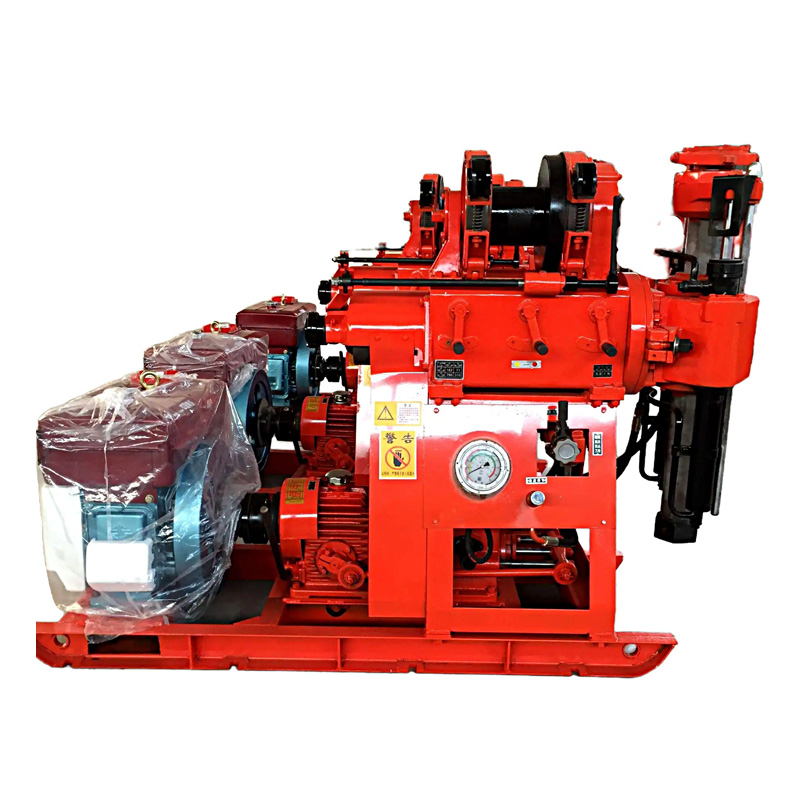
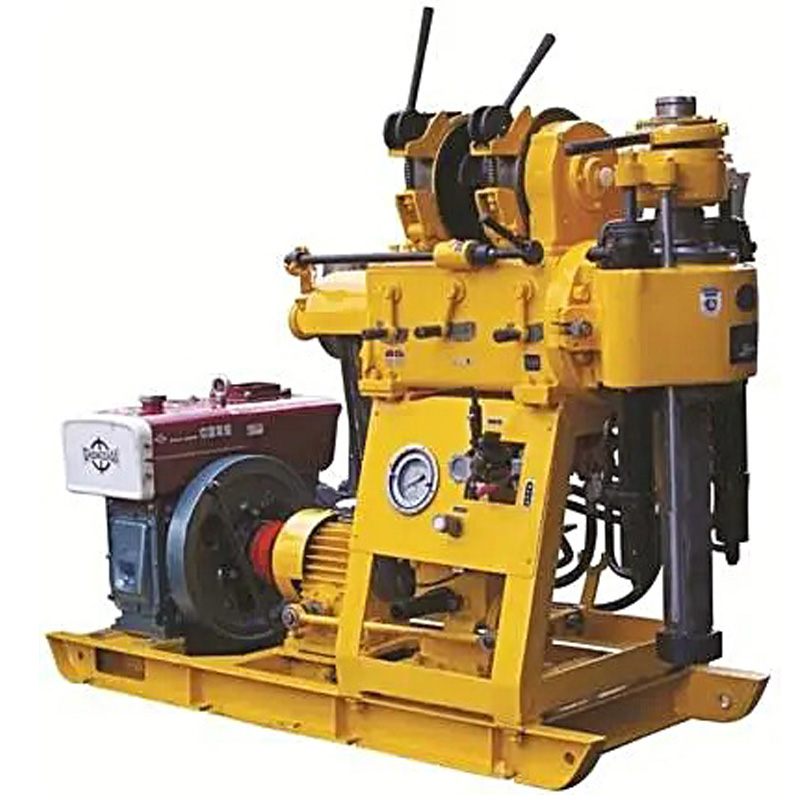
In response to growing demand for efficient, affordable, versatile core drilling solutions, Jinghe Drilling is proud to unveil its latest small water well core drill rig, the Model JH-200. Designed specifically for remote regions, rugged terrain, and tight budgets, this compact unit brings high-precision capabilities once reserved for large rigs into a small-footprint package, can move easily while working.
Key Features & Advantages
- Compact & Portable Design
The JH-200 is built for mobility: weighing under 2.5 tons, mounted on a tracked chassis (or light wheeled trailer version), it can be deployed on narrow or uneven paths, steep hillside access, or farmland with limited road infrastructure.
- Core Drilling Depth & Bore Size
Capable of core drilling to depths of 150-300 meters, depending on ground conditions, with core diameters in the 50-100 mm range, making it ideal for water aquifer exploration, geological mapping, and hydrogeological surveys.
- Multi-Mode Drilling Adaptability
Designed to switch between multiple drilling methods: mud circulation, reverse circulation, DTH (Down-The-Hole), and casing drilling modes. This flexibility allows operations in variable geology — from soft soils to fractured rocks.
- User-Friendly & Easy Maintenance
Intuitive control interface minimizes training time; modular parts and simplified hydraulic/electrical layout make maintenance easier and reduce downtime. Spare parts are designed for easy replacement even in remote locations.
- Improved Efficiency & Sustainability
Incorporates energy-efficient hydraulic systems, lower emissions engine (often meeting regional or Tier / Stage emission standards), noise dampening, and use of more durable components. These aspects translate into lower fuel costs, less environmental disturbance, and higher uptime.
Market Context & Why It Matters
- Growing Needs in Remote & Rural Areas
Many regions around the world still lack reliable access to groundwater exploration tools. Smaller rigs can fulfill the need for affordable, rapid deployment in rural or under-served zones (e.g. parts of Sub-Saharan Africa, Southeast Asia, Latin America) where infrastructure is sparse.
- Cost vs Capacity Trade-off
Larger rigs offer deeper drilling and bigger boreholes, but their cost, complexity, and logistical footprint make them impractical in many settings. MiniCore-class rigs enable more entities (governments, NGOs, smaller companies) to perform scientific or water supply drilling without scaling up to high investment.
- Environmental & Regulatory Pressures
New regulations often enforce lower emissions, noise, and disturbance, especially in sensitive zones. Compact rigs with lower environmental footprint can more easily comply with such rules.
Recent Trends & Innovations Related
- Chinese manufacturers are increasingly promoting small to medium-sized rigs noted for their light weight, modularity, and ability to handle multiple drilling modes. Brands such as Pearldrill are launching new models aimed precisely at rural irrigation, remote water exploration, and low-cost deployments.
- Durability improvements are also notable: for example, some rigs are now marketed with hydraulic systems rated for 8,000 hours of service life, reducing maintenance costs and downtime.
Impacts & Forward Outlook
- Enhanced Access to Safe Water: With more affordable rigs, communities can better assess groundwater resources, leading to more sustainable water supply planning.
- Boost to Geological Survey & Research: Compact rigs make it easier for academic and governmental survey programs to collect core samples from many more sites.
- Potential for Local Manufacturing & After-Sales Service: As demand for small rigs grows, opportunities for local assembly, spare parts, training, and maintenance arise, which can bolster regional economies.


