Date: December 2025
Location: China
Industry experts highlight key factors to improve drilling efficiency and safety
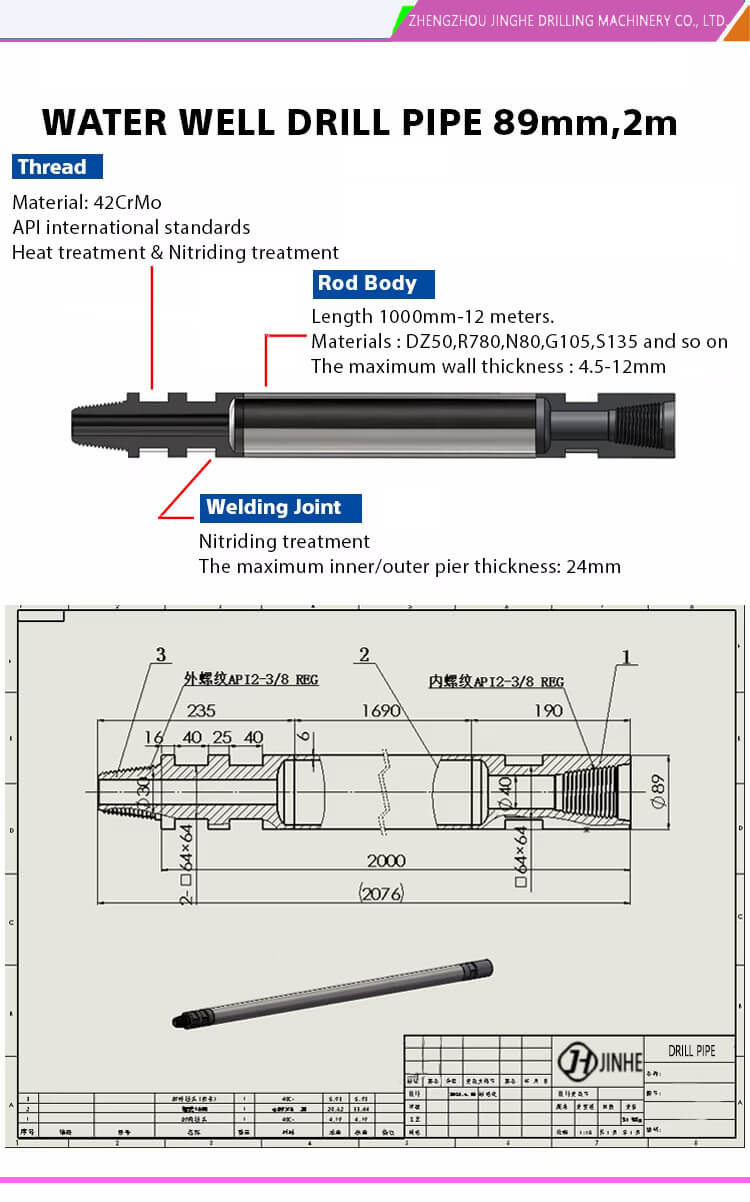
As global demand for groundwater continues to rise, water well drilling projects are increasing across agriculture, industry, and residential sectors. Experts note that selecting the right water well drill pipe is one of the most critical decisions in any drilling operation, directly affecting efficiency, safety, and long-term costs.
Material Selection Remains the Top Priority
According to drilling professionals, the choice of material largely depends on well depth and geological conditions. High-strength alloy steel drill pipes are the most widely used due to their excellent tensile strength, torque resistance, and durability, making them suitable for deep wells and hard rock formations. For shallow wells and less demanding conditions, PVC or UPVC pipes are sometimes used because of their corrosion resistance and lower cost, though they offer less mechanical strength.
Diameter and Length Must Match the Rig
Another key factor is pipe size. Drill pipe diameter should align with the drilling rig’s capacity and the intended borehole size. Larger diameters can improve circulation and drilling efficiency but require more power and handling capability. Pipe length also matters: longer pipes reduce the number of connections and speed up drilling, while shorter pipes are easier to transport and maneuver on smaller job sites.
Connection Quality Ensures Operational Safety
Threaded connections are often overlooked but are essential for safe drilling. Poor-quality threads can lead to leaks, loss of torque, or even pipe failure downhole. Industry standards recommend using drill pipes with precision-machined, standardized threads that are fully compatible with the drilling rig to ensure reliable performance under high stress.
Strength and Wall Thickness Matter
Wall thickness determines a pipe’s ability to withstand internal pressure, bending, and fatigue. Thicker walls and higher strength grades are typically required for deep wells, where torque and tensile loads are significantly higher. Selecting the correct strength rating helps prevent deformation or breakage during drilling operations.
Quality Standards and Supplier Reputation
Experts also emphasize the importance of purchasing drill pipes that meet recognized API industry standards and come from reputable manufacturers. Certified products usually offer better dimensional accuracy, consistent material properties, and longer service life. Reliable suppliers can also provide technical guidance, helping contractors choose the most suitable specifications for their projects.
Balancing Cost and Long-Term Value
While budget considerations are unavoidable, specialists warn against choosing drill pipes based on price alone. Higher-quality pipes may require greater initial investment but often result in lower maintenance costs, fewer failures, and longer service life—ultimately reducing total project expenses.
Conclusion
Choosing the best water well drill pipe requires a careful balance of material, size, strength, and quality. As drilling projects become deeper and more complex, informed selection of drill pipe is increasingly seen as a key factor in ensuring safe, efficient, and cost-effective water well construction.
 Further information, please contact:
WeChat/WhatsApp: 0086 19837103511
Email: jhzc@kdrill.com


